
Area guide · Cape Town
New developments in City Bowl, Cape Town
The City Bowl suits people who want to walk to work, restaurants and the mountain, and who are happy in an apartment or a small terrace house rather than a big garden. It covers the city centre and Foreshore, De Waterkant and Bo-Kaap, and the residential slopes of Gardens, Tamboerskloof, Oranjezicht and Vredehoek below Table Mountain, Lion's Head and Signal Hill. Most new supply is sectional-title apartments.
 By RealSoon editorial team·Last reviewed
Living in the City Bowl
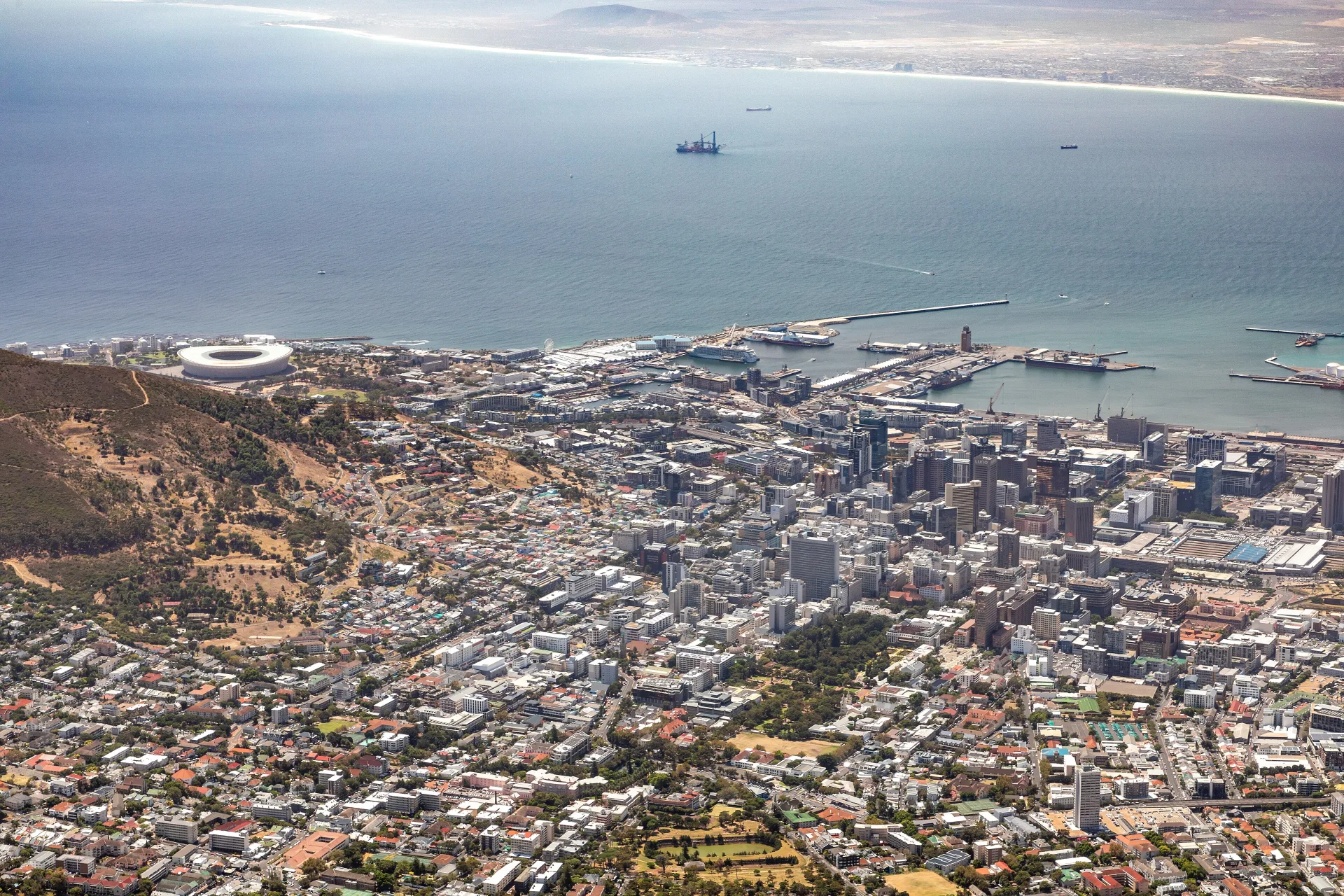
The City Bowl is the part of Cape Town enclosed by Table Mountain, Devil's Peak, Lion's Head and Signal Hill, opening onto Table Bay. The flat land near the harbour holds the city centre and the Foreshore, with offices, hotels and a growing number of residential towers. Uphill, Gardens, Tamboerskloof, Oranjezicht and Vredehoek are older residential suburbs of Victorian and Edwardian houses, walk-ups and newer apartment blocks.
Day-to-day life is close-range: Kloof Street, Bree Street and the Company's Garden are within walking distance for many residents, and trails into Table Mountain National Park start at the top of the suburbs. The trade-off is density, traffic at peak hour and limited parking in older streets.
Getting around
The City Bowl is served by MyCiTi feeder routes that loop through the residential suburbs and connect at Civic Centre station: 101 and 111 (Vredehoek and Gardens), 103 (Oranjezicht and Gardens), 104 (Oranjezicht, Gardens, Adderley and the Waterfront) and 113 (Upper Kloof Street, Adderley and the Waterfront). From Civic Centre you can change to routes heading up the West Coast or along the Atlantic Seaboard, and route 118 runs from Adderley to Hout Bay.
Cape Town International Airport is roughly 20 km east along the N2. MyCiTi lists its A01 airport service as temporarily suspended, so most residents drive or use e-hailing for airport trips. For work in the city centre, many City Bowl residents walk or cycle.
The property market and what new developments look like
New residential supply in the City Bowl is overwhelmingly apartment-led and sold as sectional title. On the Foreshore and in the city centre that usually means mixed-use towers with studios, one- and two-bedroom units, shared amenities such as a gym or rooftop pool, and retail at street level. On the slopes, projects tend to be smaller boutique blocks on consolidated plots, often with fewer units and larger floor plates.
Heritage rules shape what can be built in some neighbourhoods. The City of Cape Town placed the whole of Bo-Kaap in a heritage protection overlay zone, gazetted on 12 April 2019, which means development applications there are assessed for their impact on the area's heritage. If short-term letting is part of your plan, read the scheme's conduct rules before you sign, because body corporates can restrict it. Browse current projects on our developments page.
Buying off-plan in the City Bowl
Most City Bowl new builds are sold off-plan, often well before construction is finished. You usually pay a deposit, which should be held in an attorney's trust account until transfer, and the balance on registration. Where the developer is a VAT vendor, the price includes VAT and you do not pay transfer duty.
Before you commit, check the developer's track record, the expected completion date and what happens if it slips, the levy estimate, parking allocation, and the finishes schedule. Our guide to buying off-plan in South Africa walks through the contract, guarantees and transfer process step by step, and where to research a new development in Cape Town shows where to verify the developer, the agent and the site.
Who the City Bowl suits
The City Bowl works well for young professionals and couples who work in the city centre, people who want to live without depending on a car every day, and buyers looking for a lock-up-and-go apartment. It also attracts investors targeting rental demand from people working in the centre.
Families who want space and a garden often look further out, to the Southern Suburbs, while buyers who want a sea-facing apartment tend to compare the City Bowl with the Atlantic Seaboard next door.
New developments in City Bowl
There are no developments listed here yet.
Quick answers
What kind of new developments are there in the City Bowl?
New developments in Cape Town's City Bowl are mostly sectional-title apartments: mixed-use towers with studios and one- and two-bedroom units on the Foreshore and in the city centre, and smaller boutique blocks in Gardens, Tamboerskloof, Oranjezicht and Vredehoek.
Is there public transport in the City Bowl?
Yes. MyCiTi routes 101, 103, 104, 111 and 113 run through City Bowl suburbs such as Gardens, Oranjezicht, Vredehoek and Upper Kloof Street, and connect at Civic Centre station with routes to other parts of Cape Town.
Can you develop or renovate property in Bo-Kaap?
Yes, but with extra scrutiny. Bo-Kaap, in the City Bowl, is in a City of Cape Town heritage protection overlay zone gazetted in April 2019, so development and alteration applications there are assessed for their impact on the area's heritage. The overlay does not stop properties being bought or sold.
Do I pay transfer duty on a new apartment in the City Bowl?
Usually not. When you buy a new City Bowl apartment from a developer who is registered for VAT, VAT is included in the purchase price and transfer duty is not payable. Check the sale agreement to confirm how the price is structured.
Which ward is the City Bowl in?
The City Bowl falls mainly in City of Cape Town wards 77 and 115, both in Subcouncil 16. Ward 77 includes Bo-Kaap, Oranjezicht, Tamboerskloof, Vredehoek and parts of Gardens; ward 115 includes much of the city centre, the Foreshore and other parts of Gardens.
New developments in City Bowl, by email
Launches, price changes and new guides for City Bowl, matched to your budget. Once a week, free, and no one will call you.